
Missourians, our 4th amendment rights are being violated!
Flock, ALPR (automatic license plate readers) and the "Real Time Info Center" known as RTIC are a part of a massive surveillance apparatus our elected officials have and are illegally putting in place across the state Missouri.
This is an egregious and flagrant violation of our constitutionally protected rights.
With these cameras in place we are all under surveillance,
at all times, for all crimes.
We are almost finished setting up our 501c4 and PAC and then we can take donations, send the petitions to the printer, and put this on the 2028 election in November.
Click me to view the petition.
"The measure of a free nation isn't how much information the government can collect about innocent people—it's how well it protects their rights while pursuing legitimate public safety."

What the cameras look like around town:


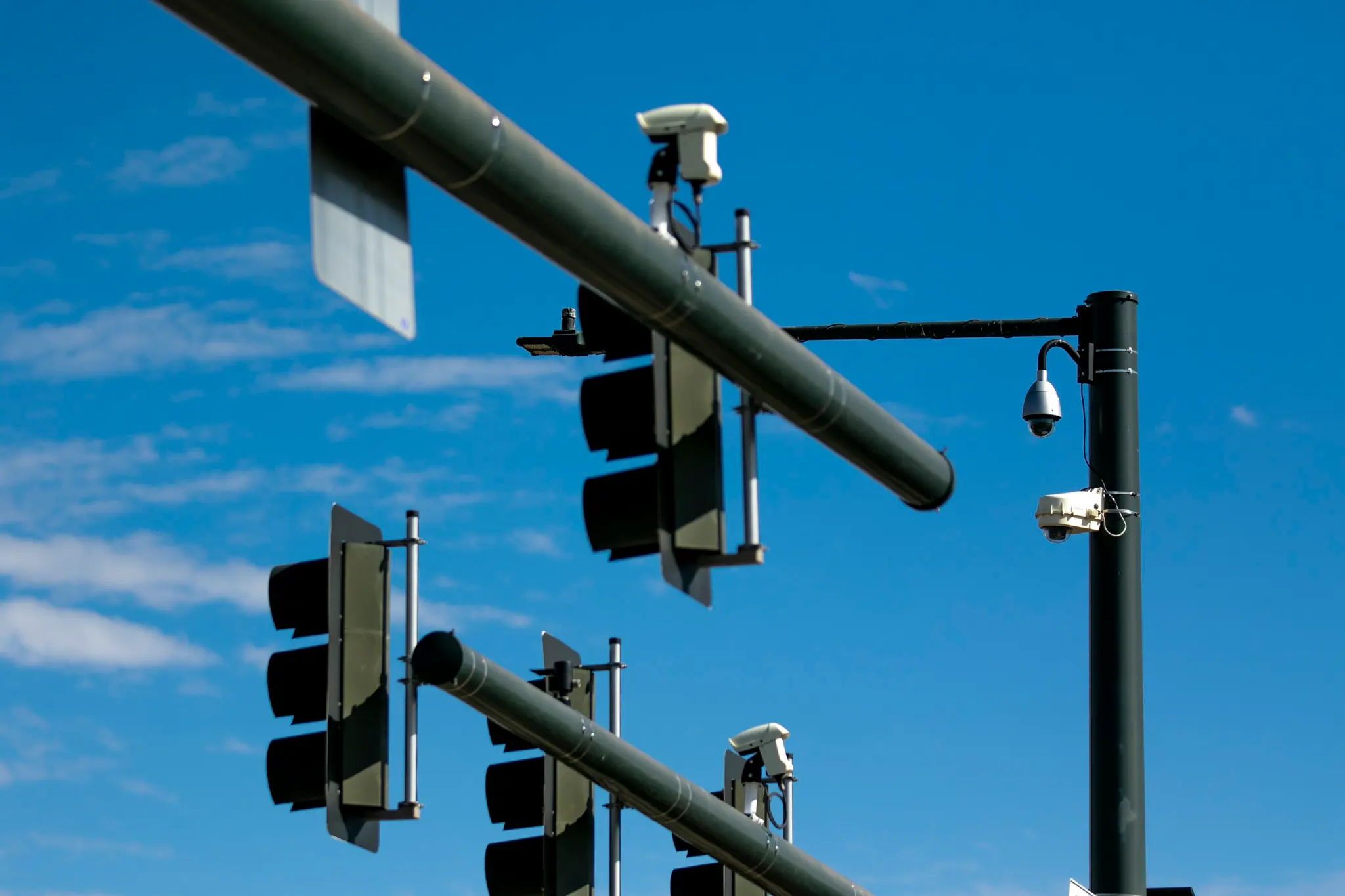
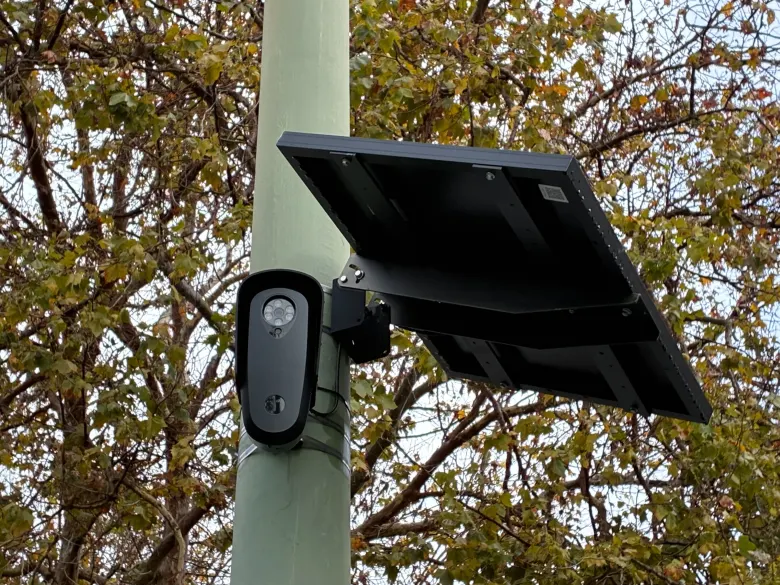
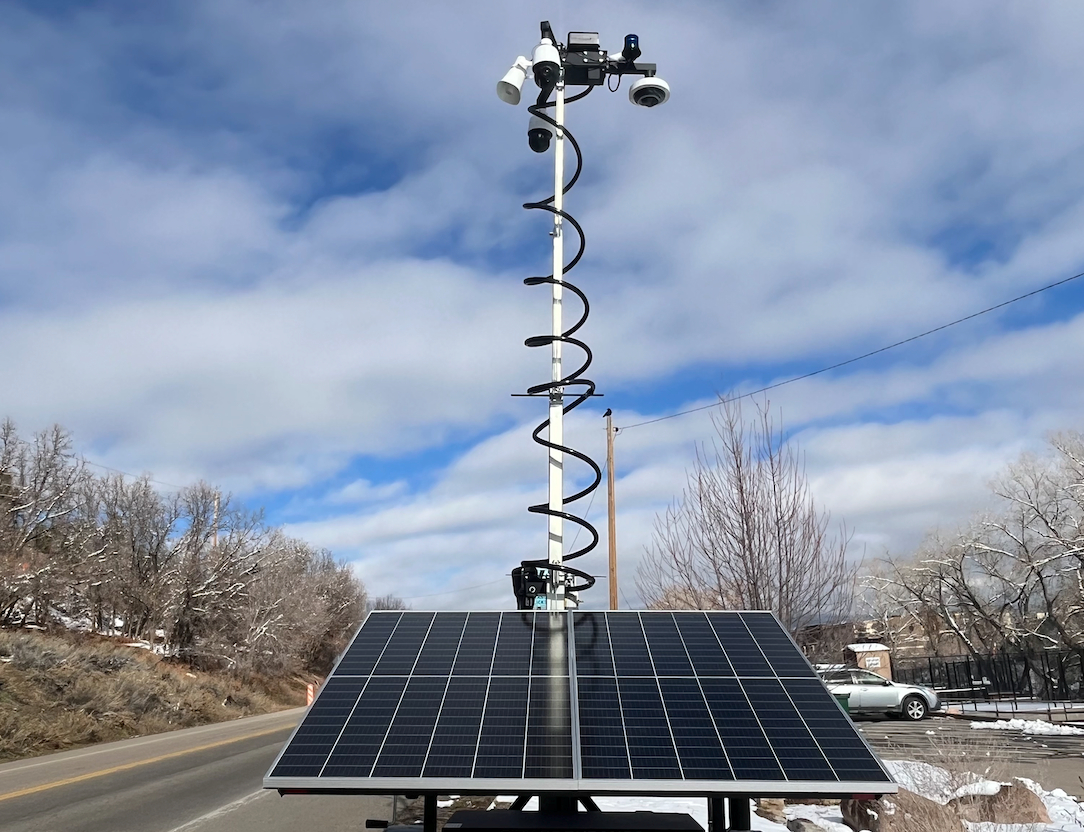
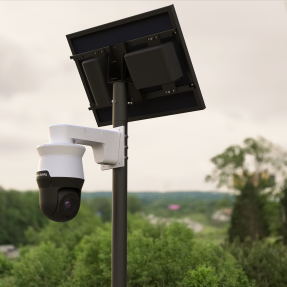
Where are they located? Is it just one or two cameras?


These cameras aren't like your normal traffic cameras.
This surveillance technology records and tracks every car that comes into view, and then an AI algorithm catalogs the make, model, color, license plate number, or lack of plate, bumper stickers, and even scratches.
This personal information is then uploaded into a nationwide database that
any law enforcement agency with a Flock contract can search — with few regulations or oversight on
how they use what they find.
Flock provides one of the most widely used ALPR systems, but they aren't the only company trying to make a buck by spying on us.
Axon, Vigilant Solutions (a subsidiary of Motorola Solutions), Genetec, PlateSmart, Innova Systems, Rekor, ELSAG, Perceptics, and Jenoptik are a few of the other leading companies selling ALPRs to police, private companies, and others.
Some of these camera systems have facial recognition.
What is the RTIC (Real Time Information Center)?
Via MidRivers Magazine :
"O’Fallon opened its Real Time Information Center (RTIC) with a ribbon cutting on March 12, 2026. The room is inside the city’s justice center and is equipped with a 25-foot video wall, five consoles with monitors, and a supervisor’s office.
The RTIC is designed to coordinate efforts, bring in different technologies, and collaborate with member agencies all in one location.
Participating agencies are St. Charles City, St. Peters, Cottleville, Lake Saint Louis, and Wentzville.
With the RTIC, all technologies are available for these municipalities to use, as well as O’Fallon. The project was paid for with drug seizure tax and a use tax implemented in O’Fallon several years ago. "
Drug seizure money per the
Missouri Constitution is supposed to go to fund school for our children.
However if they give that money to the Federal government, they instead receive 80% back for their own use and that money
no longer goes to Missouri's children despite the State constitution.
Instead it is funding a mass surveillance program.
This program has been expanded and now includes
Saint Louis County and City since this article was published.
What is the 4th Amendment?
The right of the people to be secure in their persons, houses, papers, and effects, against unreasonable searches and seizures, shall not be violated, and no warrants shall issue but upon probable cause, supported by oath or affirmation, and particularly describing the place to be searched and the persons or things to be seized.

In today's digital age, these essential constitutional protections must defend us from the quiet tracking of our electronic activities. During the Jones case, Justice Sonia Sotomayor warned that constant digital surveillance builds an invasive record of a person's private life—revealing political, religious, and personal associations—which ultimately threatens the very heart of our right to privacy.

Justice Sotomayor
"Continuous digital monitoring creates a comprehensive record of an individual's private life... which compromises the core of our constitutional privacy."

Justice Alito
"The Government’s installation of a GPS device on a target’s vehicle, and its use of that device to monitor the vehicle’s movements, constitutes a 'search.'"
Surveillance Case Summary Table
Case
Chatrie v. United States
Technology
GPS tracker attached to a car
Historical cell-site location records
Google Location History / geofence warrants
Holding
Installing and using the tracker is a Fourth Amendment search.
Police generally need a warrant to obtain long-term cell-phone location records from a wireless carrier.
Obtaining users' location data from Google is a Fourth Amendment search because people have a reasonable expectation of privacy in that data.
The power to track every movement is a power that is frequently abused. Across the country, investigations have revealed how law enforcement officers use these systems for personal reasons, targeted harassment, and warrantless surveillance beyond the scope of any investigation.
This is a small sampling of the numerous violations and they are compounding daily.
Widespread Misuse of Flock Surveillance
Brentwood, MO Officer Stalks Ex-Wife - Zero Repercussions
A Brentwood Missouri police officer used ALPR technology to track his ex-wife’s vehicle, got caught, and the police department responded with "this is a personnel issue, we are unable to comment further.”
Further highlighting the fact that there are zero repercussions for misuse and validating every citizens concerns.
If I'm not doing anything wrong, I don't have anything to worry about, right?
Why do we close our front doors?
Why do we seal our ballots?
Why do we protect attorney-client conversations?
Why do we keep medical records confidential?
Privacy matters.
It is the condition that allows
every other liberty to be exercised freely.
This isn't about being against law enforcement.
We ARE police, firefighters and other first responders.
We all support our first responders because we are first responders.
Imagine your 16-year-old daughter gets her driver's license. She drives to school, then to soccer practice, then to a friend's house. She isn't suspected of any crime. Yet every day, a network of cameras records where she was, when she was there, and which route she took. Over weeks and months, anyone with access can reconstruct her life.
Imagine your son starts attending church on Wednesday nights, goes to counseling after school, visits a girlfriend, or interviews for a job he doesn't want anyone else to know about. None of those choices are the government's business. But a historical record of his movements may exist anyway.
Maybe your wife is meeting with an oncologist to treat her cancer and she doesn't want anyone to know.
Maybe your husband is seeing a therapist for PTSD from working in law enforcement.
Maybe your daughter is visiting a reproductive health clinic and suffering from infertility or having an abortion after rape.
Maybe your father is attending an Alcoholics Anonymous meeting. Maybe your teenager is meeting with a political organization you disagree with—or one you strongly support.
The point is that in a free country, the government shouldn't be quietly compiling those records
simply because technology makes it possible.
The Supreme Court has ruled that long-term location monitoring
can reveal "familial, political, professional, religious, and sexual associations."
How can you practice your religion without freedom?
How can you enjoy your rights of free speech or protest without freedom?
How can you speak out at government meetings if they've tracked you, compiled it in a secret database?
The concern was not just about catching criminals.
It was about the government acquiring a detailed picture
of ordinary people's lives without meaningful limits.
The Fourth Amendment wasn't written to protect only guilty people. It was written to protect innocent people from unnecessary government intrusion. The rights protected by the Constitution are not rewards for people who obey the law. They are protections for everyone. When someone commits a crime, the government gains authority to investigate that person—not the authority to treat every citizen as a potential suspect.
A free society does not say, "One person broke the law, so everyone must surrender their privacy."
It says, "Find the person responsible, follow due process, and respect the rights of everyone else."
Today it's cameras on intersections. Tomorrow it's cameras on every entrance to every neighborhood. The technology only gets cheaper. The storage only gets longer. The search tools only get more powerful.
Ask yourselves a simple question: Would you be comfortable if someone could pull up a report showing every place your children drove over the last six months? Every friend's house. Every date. Every doctor's office. Every political meeting. Every religious service. Every mistake.
Because that is exactly what you are doing. If your answer is no for your own family, why should it be acceptable for every family in this city?
This isn't about being against law enforcement.
We ARE police, firefighters and other first responders.
We all support our first responders because we are first responders.
Police should have tools to solve crimes.
But tools should have limits.
Search warrants exist for a reason.
Individualized suspicion exists for a reason.
Constitutional rights exist for a reason.
We are a constitutional republic and that means you do not lose your rights because someone else broke a law.
History teaches that powers granted for the best of intentions rarely remain limited to those intentions. Every surveillance system eventually depends not just on today's officials, but on tomorrow's as well. Our freedom doesn't disappear all at once. It erodes one database, one camera, one exception at a time. Throughout history, governments have monitored religious minorities, political dissidents, journalists, and activists. The question isn't whether you trust today's officials. It's whether you're willing to give every future administration the same power.
If the government can reconstruct where people worship, who they meet with, what support groups they attend, and what organizations they associate with, that raises concerns under both the First Amendment's protections for religious exercise and association and the Fourth Amendment's protection against unreasonable searches.
A free society should not require law-abiding people to wonder whether attending a church service, synagogue, mosque, Bible study, counseling session, or civic meeting creates a permanent government record of their movements.
Imagine a lifelong Catholic parent whose child begins questioning the family's beliefs and quietly seeks counseling or support from a different faith community. A future government or official with different views about religion could theoretically use a detailed record of that person's movements—where they worship, which organizations they visit, who they meet with—to draw conclusions about their beliefs, associations, or private family matters.
This is happening today, right here, right now and the concern is that creating permanent records of innocent people's movements gives future officials a power that could be abused. The same concern applies to a Catholic attending a traditional parish, a Protestant attending a different denomination, a Jewish person visiting a synagogue, a Muslim person visiting a mosque, or anyone participating in a protected religious or civic activity.
The First Amendment protects religious freedom precisely because the government is not supposed to decide which beliefs, associations, or communities deserve scrutiny.
We should not build a system that treats every citizen's daily movements as government records waiting to be searched. We should protect both public safety and the constitutional liberties that define this country.
What will you do without freedom?
Privacy matters because it is the condition that allows every other liberty to be exercised freely.
Without privacy, freedom of speech becomes self-censorship. People are less likely to express unpopular opinions if they believe every conversation, search, or meeting is being recorded.
Without privacy, freedom of religion becomes conditional. Worship loses part of its meaning if attendance at services, meetings with clergy, or religious associations can be routinely monitored and cataloged.
Without privacy, freedom of association weakens. Citizens may avoid joining advocacy groups, political parties, unions, charities, or civic organizations if they fear being identified, tracked, or judged for those affiliations.
Without privacy, the right to petition the government is chilled. People are less willing to criticize public officials or participate in protests when they believe doing so creates a permanent government record.
Without privacy, the protections of the Fourth Amendment become hollow. If the government can continuously monitor where people go, whom they meet, and what they do without meaningful limits, constitutional safeguards against unreasonable searches lose much of their practical force.
Without privacy, even rights such as the Second Amendment can be indirectly burdened. Citizens may hesitate to attend lawful firearms training, advocacy meetings, or competitions if exercising one constitutional right subjects them to extensive surveillance unrelated to any suspicion of wrongdoing.
Privacy also protects personal autonomy. It gives individuals the space to think, learn, make mistakes, build relationships, seek medical care, obtain legal advice, and develop their beliefs without constant observation. It preserves the distinction between a free society, where government must justify intrusions into private life, and a surveillance society, where citizens must justify why they deserve to be left alone.
The Supreme Court has increasingly recognized this principle. In United States v. Jones,
the Court acknowledged that prolonged location tracking reveals intimate details about a person's life.
In Carpenter v. United States, the Court recognized that comprehensive digital location records provide "an intimate window into a person's life" and generally require a warrant before the government may obtain them.
Ultimately, privacy is not about hiding wrongdoing. It is about preserving the freedom to live as an independent citizen rather than as a person whose every movement, association, and decision is subject to routine governmental observation. As Justice Louis Brandeis famously described it, privacy reflects the value of "the right to be let alone."